Each nation's having different policies and concerns has actually resulted in a variety of distinctions existing between the systems. That said, each country offers public health care to all UK permanent homeowners that is totally free at the point of use, being spent for from general tax. In addition, each likewise has an economic sector which is significantly smaller sized than its public equivalent, with provision of personal health care acquired by methods of private medical insurance, moneyed as part of a company funded healthcare plan or paid straight by the client, though arrangement can be limited for those with conditions such as HIV/HELP.
These commissioning bodies do not provide services themselves directly, however procure these from NHS Trusts and Structure Trusts, as well as private, voluntary, and social business sector providers. Healthcare in Australia is offered by both personal and government organizations. Medicare is the publicly financed universal health care endeavor in Australia.

Medicare is moneyed partially Helpful site by a 2% income tax levy (with exceptions for low-income earners), but mainly out of basic revenue. An additional levy of 1% is enforced on high-income earners without personal medical insurance. Along with Medicare, there is a different Pharmaceutical Advantages Plan that considerably subsidises a variety of prescription medications.
Building upon less structured structures, in 1963 the presence of a single-payer health care system in Spain Mental Health Doctor was established by the Spanish government. The system was sustained by contributions from workers, and covered them and their dependants. The universality of the system was established later on in 1986. At the exact same time, management of public health care was handed over to the different autonomous neighborhoods in the nation.
In addition, in parallel to the single-payer health care system there are personal insurers, which provide coverage for some private doctors and medical facilities. Employers will in some cases provide personal medical insurance as a benefit, with 14. 8% of the Spanish population being covered under private health insurance in 2013 - how much would universal health care cost. In 2000, the Spanish healthcare system was rated by the World Health Organization as the 7th finest in the world.
Medicare in the United States is a public health care system, but is limited to individuals over the age of 65, individuals under 65 who have particular disabilities, and anybody with end-stage renal disease. A number of proposals have actually been produced a universal single-payer healthcare system in the United States, amongst them the United States National Health Care Act (widely referred to as H.R.
On July 18, 2018, it was announced that over 60 House Democrats would be forming a Medicare for All Caucus. Supporters argue that preventive health care expenses can save a number of numerous billions of dollars each year because openly funded universal health care would benefit employers and consumers, that employers would take advantage of a larger pool of possible clients and that employers would likely pay less, would be spared administrative expenses, and injustices in between employers would be minimized.
The 7-Second Trick For What The American People Need Is Not More Health Care
At over 27 million, the number of people without medical insurance protection in the United States is among the primary concerns raised by advocates of healthcare reform. Lack of health insurance is related to increased death about sixty thousand preventable deaths each year, depending upon the study. A research study done at Harvard Medical School with Cambridge Health Alliance showed that nearly 45,000 yearly deaths are connected with an absence of client health insurance.
Backers of single-payer or Medicare for All note that minorities and the poor, in addition to rural homeowners in basic, are less able to afford personal health insurance, which those who can must pay high deductibles and co-payments that threaten households with monetary mess up. Advocates also argue that single-payer might benefit from a more fluid economy with increasing economic growth, aggregate demand, corporate profit, and quality of life.
Any national system would be spent for in part through taxes replacing insurance coverage premiums, but advocates likewise think cost savings would be recognized through preventive care and the removal of insurance business overhead and medical facility billing costs. A 2008 analysis of a single-payer bill by Physicians for a National Health Program approximated the immediate savings at $350 billion annually.
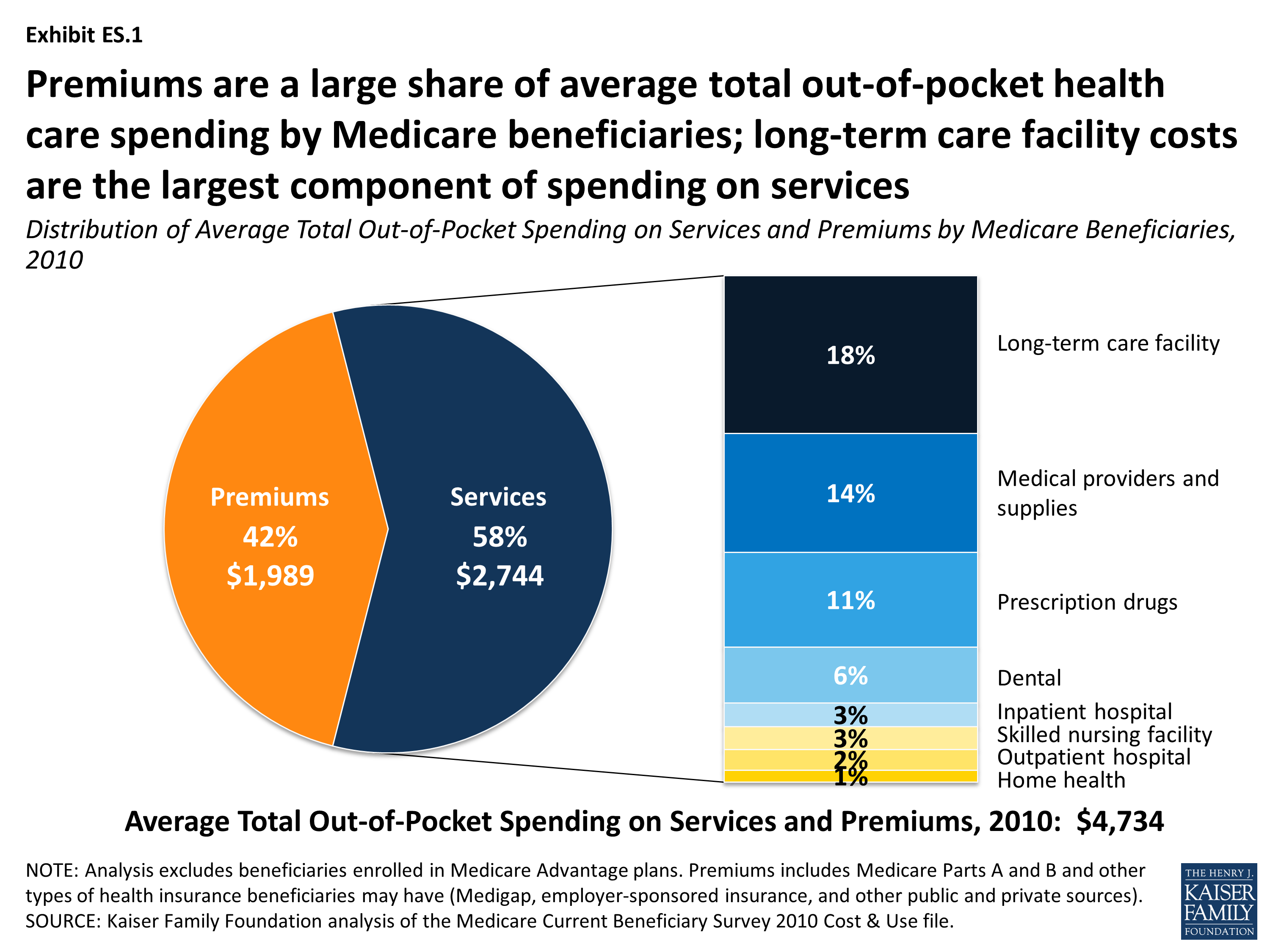
Challengers argue that access to health care diminishes under single-payer systems, which the overall quality of care suffers. Opponents also declare that single-payer systems cause shortages of general doctors and specialists and lower access to medical innovation. Government is increasingly included in U.S. health care costs, paying about 45% of the $2.
Nevertheless, studies have shown that the publicly administered share of health costs in the U.S. might be closer to 60% as of 2002. According to Princeton University health economist Uwe Reinhardt, U.S. Medicare, Medicaid, and State Children's Medical insurance Program (SCHIP) represent "kinds of Website link 'social insurance' combined with a largely personal health-care delivery system" instead of types of "socialized medication." On the other hand, he describes the Veterans Administration healthcare system as a pure form of mingled medicine since it is "owned, run and funded by federal government." In a peer-reviewed paper published in the, researchers of the RAND Corporation reported that the quality of care gotten by Veterans Administration patients scored substantially greater general than did equivalent metrics for clients currently utilizing United States Medicare.
The act would develop a universal single-payer healthcare system in the United States, the rough equivalent of Canada's Medicare, the United Kingdom's National Health Service, and Taiwan's Bureau of National Health Insurance, amongst other examples. The costs was first presented in 2003 and has been reestablished in each Congress considering that.
676 was anticipated to be debated and voted upon by the Home in September 2009, but was never discussed. In the wake of Bernie Sanders' 2016 presidential campaign, in which a push for universal healthcare included plainly, single-payer propositions got traction. Conyers reestablished his costs in the House of Representatives in January 2017.
The 4-Minute Rule for How Did The Patient Protection And Affordable Care Act Increase Access To Health Insurance?
In September of the exact same year, Sanders himself, together with 16 co-sponsors, presented a Medicare-for-all bill in the Senate (S. 1804). An analysis of a Mercatus Center study of the 2017 proposition by economist Jeffrey Sachs discovered that "it rightfully and straightforwardly concludes that M4A would provide more health care protection at lower cost than the status quo, predicting a net decrease in nationwide health expenditures of roughly $2 trillion over a 10-year duration (2022-2031), while likewise allowing increased healthcare protection." The Congressional Budget Plan Workplace and associated government agencies scored the expense of a single-payer healthcare system several times given that 1991.
A July 1993 scoring likewise resulted in favorable outcomes, with the CBO mentioning that," [a] s the program was phased in, the administrative savings from switching to a single-payer system would offset much of the increased demand for healthcare services. Later on, the cap on the growth of the national health spending plan would hold the rate of development of spending listed below the baseline." The CBO also scored Sen.
The research study analyzed both direct expenses charged by insurance providers for profit, administration and marketing however also the indirect problem put on health care service providers like healthcare facilities, nursing homes and physicians for expenses they incurred in working with personal health insurance companies consisting of contract negotiations, financial and scientific record-keeping (variable and distinctive for each payer).